Butter Chicken vs Tikka Masala: What’s the Difference?
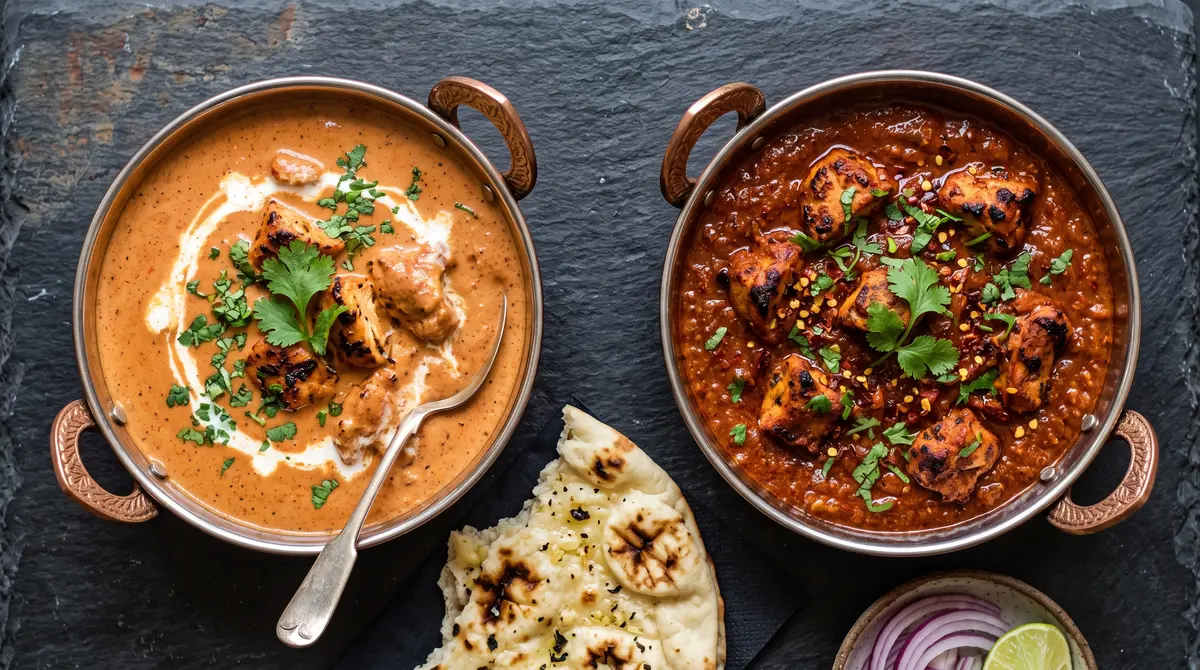
On a takeout menu, butter chicken vs tikka masala can look like two names for the same orange-red curry — both feature grilled chicken in a creamy tomato sauce, both show up next to the naan, and both get ordered by people who “don’t like spicy food.” But the two dishes have distinct origins, different sauce bases, and a real gap in how much heat they carry, even though a rushed kitchen can blur the line between them.
Where Each Dish Comes From
Butter chicken (murgh makhani) was developed in Delhi in the 1950s at the Moti Mahal restaurant, reportedly as a way to use up leftover tandoori chicken by simmering it in a butter-and-tomato gravy so it wouldn’t dry out. Chicken tikka masala has a murkier, more contested history — one widely told account traces it to South Asian restaurants in Britain, where a chef is said to have improvised a tomato-cream sauce for a customer who complained a plate of chicken tikka was too dry. Whichever account is closer to the truth, tikka masala grew up as a dish adapted for a British palate, while butter chicken developed in North India — that history is really where butter chicken vs tikka masala starts to diverge, even before the sauce comes into it.
The Sauce Base Is the Real Difference
Butter chicken’s gravy is built primarily from butter, cream, and tomato, simmered down until it’s rich and slightly sweet, with warming spices like garam masala, fenugreek, and a touch of sugar rounding out the tomato’s acidity. Tikka masala’s sauce is more variable by kitchen, but it typically carries more chili heat and a heavier hand with ground spices like cumin and coriander, and it’s more likely to be finished with cream stirred in at the end rather than simmered into the base the way butter and cream are in a classic butter chicken gravy.
Spice Level and Texture
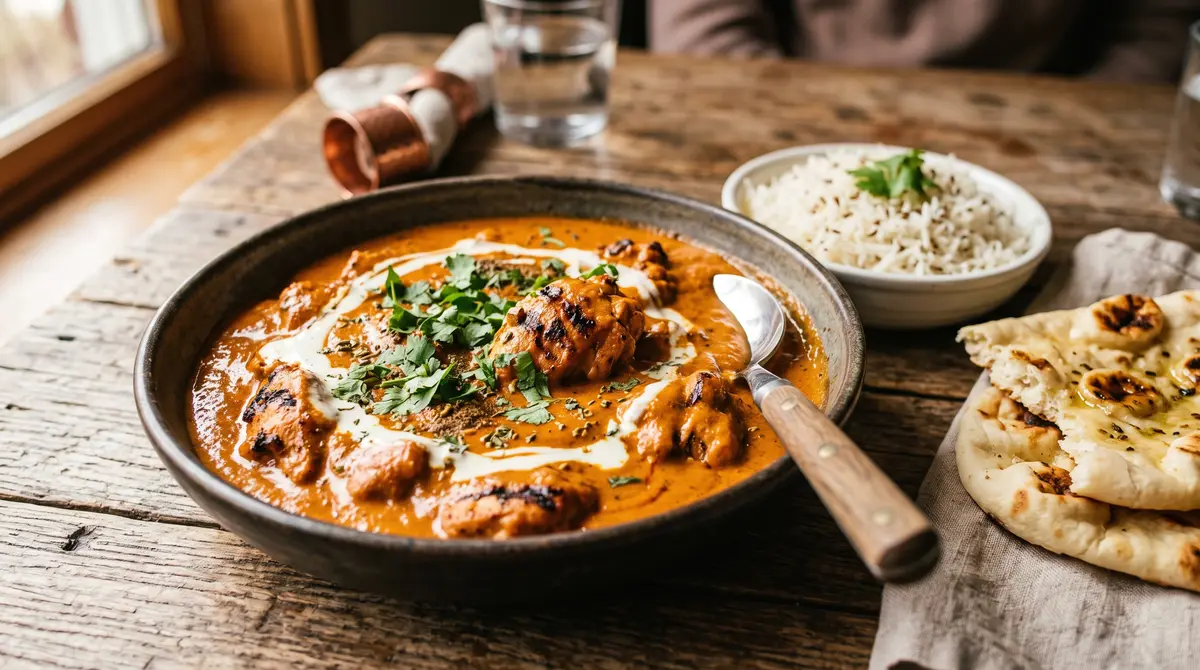
Butter chicken generally sits on the mild, slightly sweet end of the spectrum — it’s built to be comforting rather than fiery, which is part of why it’s such a common introduction to Indian food for newcomers. Tikka masala carries more heat in most restaurant versions, since it was developed with chili as a more prominent note from the start. Texturally, butter chicken’s sauce tends to be smoother and glossier from the higher butter content, while tikka masala sauce can be slightly thicker and more matte depending on how much tomato paste versus fresh tomato the kitchen uses.
Can You Tell Them Apart on a Menu?
Honestly, telling butter chicken vs tikka masala apart on a menu isn’t always possible — plenty of restaurants use the names loosely or serve a near-identical sauce under both labels, especially outside India and the UK. If you want the version closest to the original butter chicken, look for a menu description mentioning fenugreek or a butter-forward gravy. If you want more chili heat, tikka masala is the safer bet, though it’s worth asking your server directly if spice level matters to you, since both dishes vary a lot from kitchen to kitchen.
Which One Should You Order or Cook?
Deciding between butter chicken vs tikka masala at home usually comes down to how you build the sauce. If you’re cooking at home and want the closer-to-original version, build the sauce around butter, a smaller amount of tomato paste rather than crushed tomato, and a pinch of kasoori methi (dried fenugreek leaves) stirred in near the end — that’s the ingredient most home cooks skip that actually defines butter chicken’s flavor. If you’re leaning toward tikka masala, marinate the chicken in yogurt and extra chili powder before grilling it, then build the sauce with more ground coriander and cumin than a butter chicken recipe typically calls for. Neither dish is objectively better — the right pick usually comes down to whether you want a milder, butter-forward gravy or a spicier, more assertively seasoned one.
Calories and Nutrition Side by Side
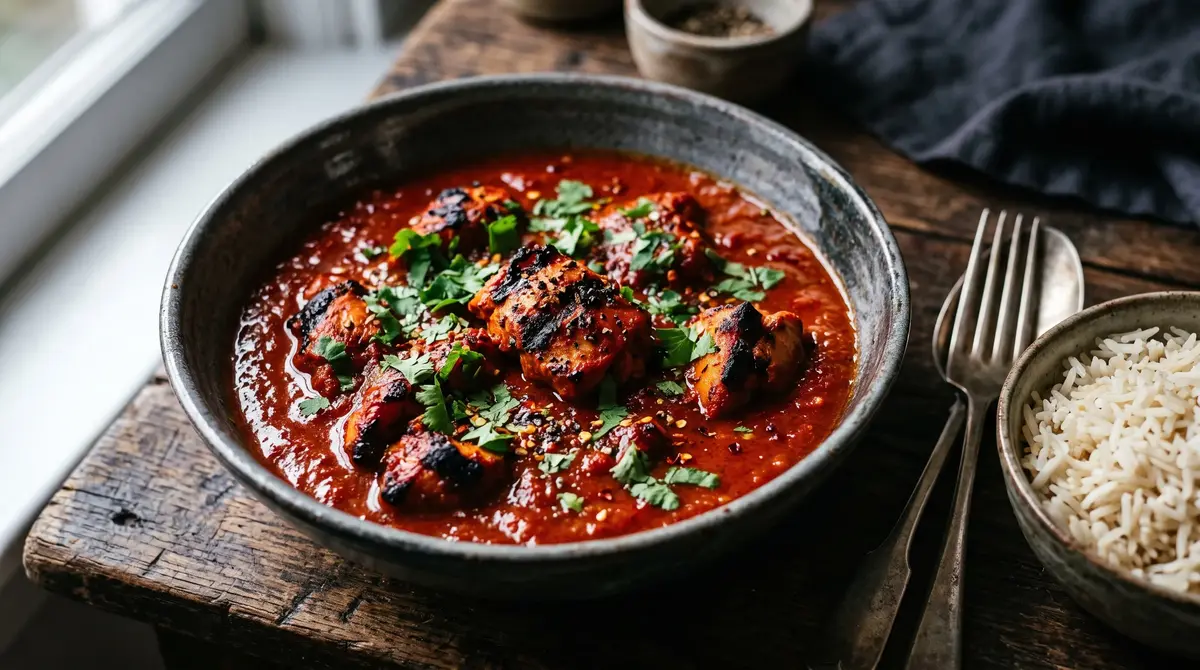
A typical restaurant serving of butter chicken runs 450-550 calories per cup, largely from the butter and cream in the gravy, with a good amount of protein from the chicken itself. Tikka masala lands in a similar range, sometimes slightly lower if the kitchen leans on tomato and yogurt more than cream, though a cream-heavy version can easily match or exceed butter chicken’s calorie count. Neither dish is a particularly light option compared to a plain grilled tandoori chicken, so portion size and how much rice or naan comes alongside matters more than which side of the butter chicken vs tikka masala choice you land on.
Frequently Asked Questions
Is butter chicken vs tikka masala just a naming difference? Not entirely — while some kitchens use the names loosely, the dishes have distinct origins and sauce styles, with butter chicken built around butter and tomato and tikka masala typically carrying more chili heat.
Which is milder, butter chicken or tikka masala? Butter chicken is generally the milder, sweeter option of the two, while tikka masala tends to have more spice and heat in most restaurant versions.
Can I make either dish at home with the same base ingredients? Yes — both start with marinated, grilled or seared chicken in a tomato-based sauce, so the same pantry (tomatoes, cream, garam masala, ginger, garlic) covers either version depending on how you balance the spices.
What should I order if I’ve never tried either dish? Butter chicken is the gentler starting point since it’s milder and slightly sweet; work up to tikka masala once you know how much chili heat you actually enjoy.
Are naan and rice served with both dishes the same way? Yes — both are traditionally scooped up with naan or spooned over basmati rice, since the sauce in each dish is the main point and needs something to carry it.
Do both dishes use the same type of chicken? Usually yes — both traditionally start with chicken marinated in yogurt and spices, then grilled or roasted (tandoori-style) before being simmered in the sauce, though home versions often skip the grilling step and just sear the chicken in a pan.