Calories in Boneless Skinless Chicken Breast (By Serving Size)
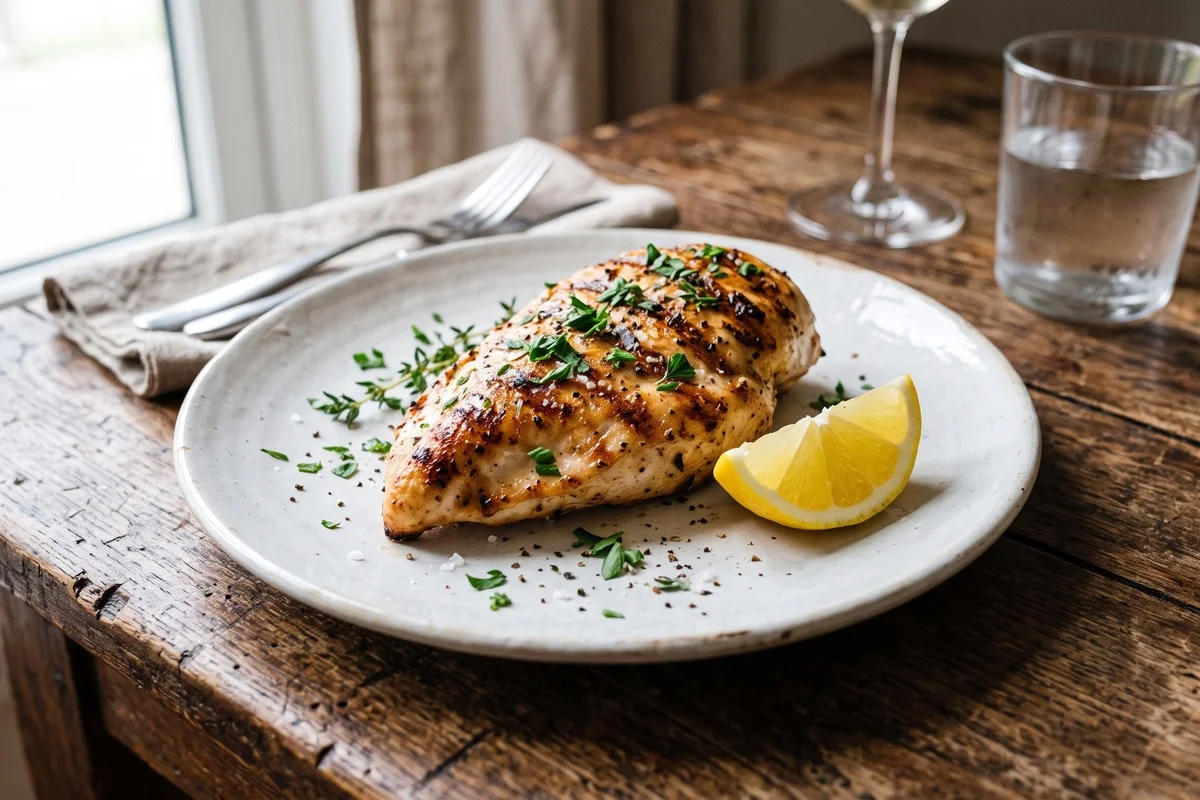
Calories in boneless skinless chicken breast change more than most people expect once you account for raw versus cooked weight, since chicken loses water as it cooks and the same piece of meat gets more calorie-dense per ounce even though the total calories in the whole piece don’t change. A raw chicken breast and the cooked version of that exact same breast will show two different numbers on a nutrition label, and mixing up which one you’re logging is one of the easiest ways to get a calorie count wrong without realizing it.
Raw vs. Cooked: The Numbers Aren’t the Same
Per USDA FoodData Central, a 100-gram serving of raw boneless skinless chicken breast has about 120 calories, 22.5 grams of protein, and 2.6 grams of fat. That same 100 grams, once roasted or baked with nothing added, comes in around 157 calories, 32.1 grams of protein, and 3.2 grams of fat — a jump that has nothing to do with added ingredients and everything to do with water loss during cooking. The protein and fat in the meat stay essentially where they were; there’s just less overall weight to divide them by, so every remaining gram carries more of the original nutrients.
This is the single biggest source of confusion in chicken breast calorie counts online. A recipe that lists “4 oz chicken breast” without specifying raw or cooked weight could mean two noticeably different calorie totals, and most people default to whichever number happens to match what they already believe they’re eating.
Calories by Common Serving Size (Cooked)
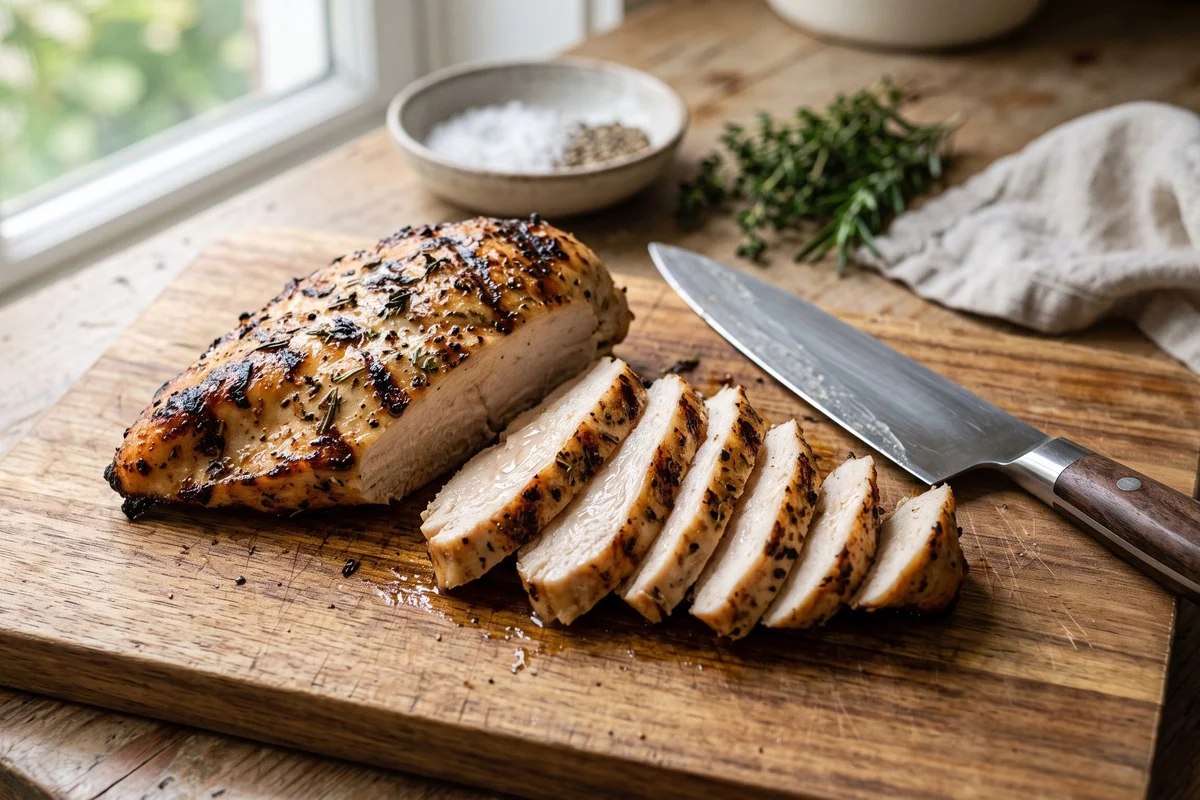
Using the USDA’s cooked figures above, here’s how calories in boneless skinless chicken breast scale by the serving sizes people actually measure out:
- 3 oz (85g), cooked: roughly 133 calories, 27 grams protein, 2.7 grams fat — this is the standard “deck of cards” reference portion used on most nutrition labels.
- 4 oz (113g), cooked: roughly 178 calories, 36 grams protein, 3.6 grams fat.
- 6 oz (170g), cooked: roughly 267 calories, 54.5 grams protein, 5.5 grams fat — closer to what a single large, restaurant-style chicken breast actually weighs once cooked.
- 100g, cooked: 157 calories, 32.1 grams protein, 3.2 grams fat, 1 gram saturated fat.
The phrase “one chicken breast” is doing a lot of unhelpful work in a lot of calorie-counting apps, since raw breast sizes vary anywhere from about 4 oz to well over 10 oz depending on the bird and how the butcher trimmed it. Weighing the actual piece you’re eating is the only way to know which of the figures above applies.
Why Protein Content Matters Here
Boneless skinless chicken breast is one of the more efficient sources of protein relative to calories, which is a big part of why it shows up so often in meal prep and muscle-building diets. At roughly 32 grams of protein per 157 calories cooked, it delivers protein at a ratio that few other whole-food proteins match without also carrying more fat along with it. Harvard Health’s guidance on daily protein needs notes that most adults benefit from spreading protein across meals rather than front- or back-loading it, which makes a lean, easy-to-portion food like chicken breast a practical way to hit a target consistently rather than in one large sitting.
Does Cooking Method Change the Calorie Count?
Plain grilling, baking, roasting, or poaching a boneless skinless chicken breast with no added fat all land at essentially the same calorie count for a given cooked weight, since none of those methods add anything to the meat itself — the differences between them are about moisture, texture, and how much the breast shrinks, not calories. What does change the number is anything added on top: a tablespoon of oil used to sear the chicken adds roughly 120 calories to the whole batch before it’s even divided into portions, and a breaded, deep-fried preparation adds meaningfully more from both the coating and the oil the coating absorbs. If a recipe or a fast-food chicken breast seems to carry far more calories than the plain-cooked figures above, the coating and cooking fat — not the chicken itself — are almost always the reason.
How to Track Chicken Breast Calories Accurately
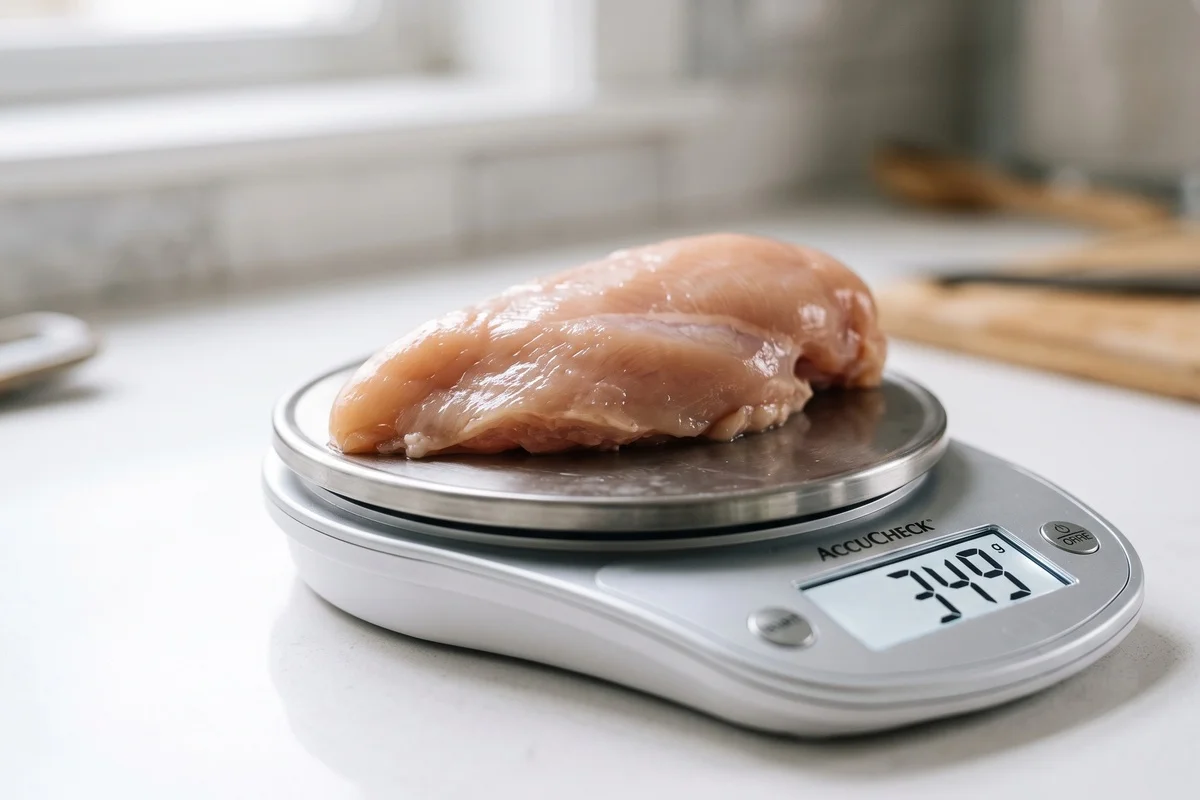
Weigh the chicken after cooking, not before, if the number you’re logging is meant to reflect what actually landed on the plate — using a raw-weight figure for a cooked piece will undercount calories, and using a cooked-weight figure for a raw piece will overcount them. A basic kitchen scale removes almost all the guesswork; eyeballing a portion against a deck of cards or the palm of a hand is a reasonable backup when a scale isn’t available, but it’s noticeably less precise for a food like chicken breast, where thickness varies a lot from piece to piece. Logging the cut correctly matters too — chicken breast is meaningfully leaner than thigh meat, so mixing the two up in a tracking app changes both the calorie and fat totals more than people expect.
Common Mistakes to Avoid
- Logging raw weight but eating cooked weight (or the reverse), which throws the calorie count off by roughly 25-30% in either direction.
- Assuming “one chicken breast” is a fixed serving size — raw breasts range from about 4 oz to well over 10 oz.
- Forgetting to count the oil, butter, or breading used to cook the chicken, which is often where the bulk of the extra calories in a “chicken breast” meal actually comes from.
- Mixing up chicken breast with chicken thigh in a tracking app — thigh meat runs noticeably higher in both calories and fat per ounce.
Frequently Asked Questions
How many calories are in a plain grilled chicken breast? A 4 oz (113g) portion of plain grilled, skinless, boneless chicken breast has roughly 178 calories and about 36 grams of protein, with no meaningful calorie difference from baking, roasting, or poaching the same cut.
Is raw or cooked chicken breast more accurate for calorie counting? Neither is “more accurate” on its own — what matters is matching the number to the weight you actually measured. If you weigh the chicken after cooking, use cooked-weight figures; if you’re portioning it raw before cooking, use raw-weight figures.
How many calories does chicken breast have per ounce? Cooked boneless skinless chicken breast runs about 44-45 calories per ounce, which comes from dividing the roughly 157 calories per 100 grams figure down to a per-ounce basis.
Does removing visible fat before cooking lower the calorie count? Slightly, but boneless skinless chicken breast already has very little visible fat to trim compared to thigh or leg meat, so the difference is small next to cuts that still have skin or a fat cap.
Why does chicken breast weigh less after cooking? Muscle tissue is largely water, and heat causes the proteins to contract and push some of that water out. A boneless skinless chicken breast typically loses somewhere around 25% of its raw weight during cooking, which is exactly why the same piece shows a higher calorie count per gram once it’s cooked.
Is chicken breast a good choice for a high-protein, lower-calorie diet? Yes — its protein-to-calorie ratio is one of the better ones among common whole-food proteins, which is why it shows up so often in meal prep built around hitting a protein target without also running up calories.