Easy Hash Browns Recipe (Crispy and Diner-Style)
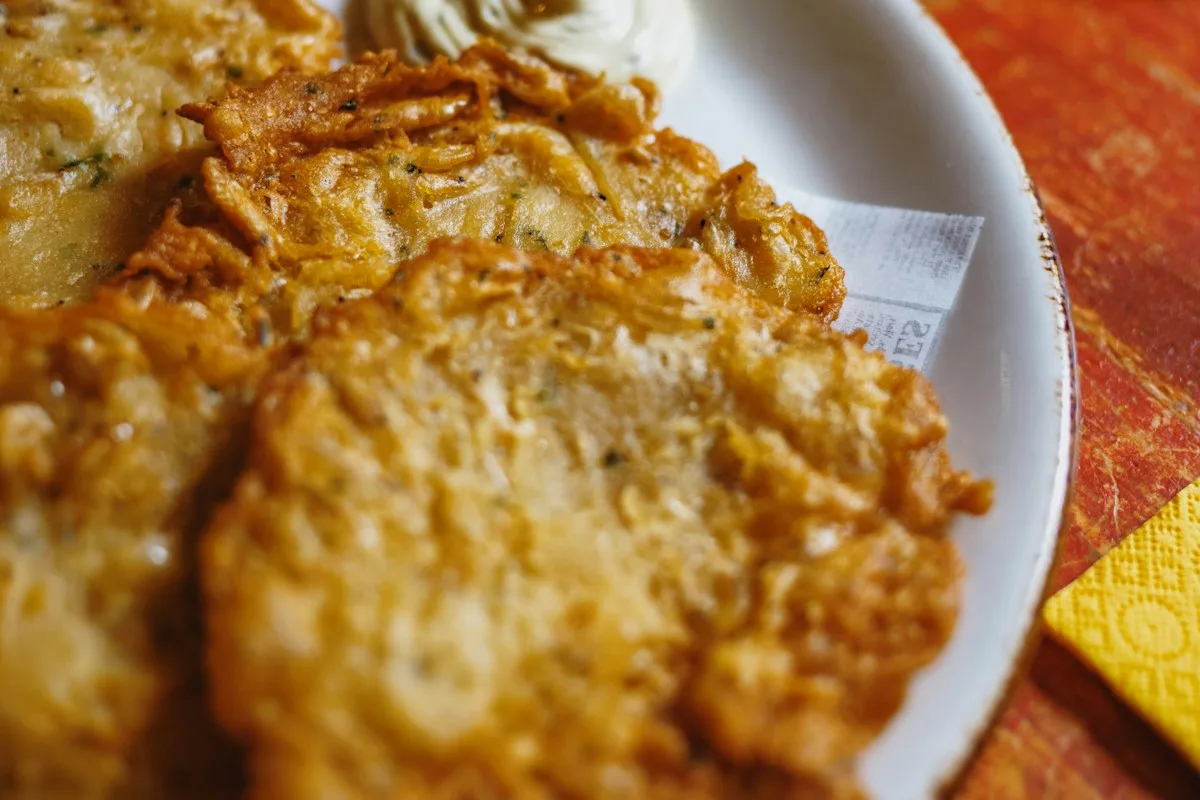
The key to this hash browns recipe is removing the water from the shredded potatoes before they hit the pan: rinse the shreds, wring them dry in a towel, then press them into a hot, oiled skillet and leave them alone until a crust forms. One pound of russets makes 4 servings in 30 minutes, at about 210 calories each.
Quick answer
Shred 1 lb peeled russets into cold water, drain, salt lightly and wring dry in a towel. Fry as one flat cake in 2 tbsp hot oil for 4 to 5 minutes without moving it, flip, add 1 tbsp oil and 1 tbsp butter, and cook 4 to 5 minutes more until both sides are deep golden.
Hash Browns
Made it? Rate this recipe
Hash Browns Ingredients
- 2 large russet potatoes (about 1 lb / 454 g), peeled
- 1 tsp salt, divided
- 3 tbsp neutral oil or ghee, divided
- 1 tbsp butter
- 1/4 tsp black pepper
- Optional: 1/4 cup finely diced onion
How to Make Hash Browns
- Shred the peeled potatoes on the large holes of a box grater into a bowl of cold water. Swish them around to rinse off the surface starch.
- Drain the shreds and pile them onto a clean kitchen towel. Sprinkle with 1/2 tsp of the salt, wait 5 minutes, then wring the towel tightly over the sink until no more liquid comes out.
- Heat 2 tbsp of the oil in a large nonstick or cast-iron skillet over medium-high heat until it shimmers. If using onion, cook it for 1 to 2 minutes until softened.
- Spread the potato shreds in an even layer and press them down firmly with a spatula. Leave them alone for 4 to 5 minutes so a crust forms.
- When the underside is deep golden (lift an edge to check), flip the cake whole or in sections and add the remaining 1 tbsp oil and the butter around the edges.
- Cook the second side 4 to 5 minutes, pressing occasionally, until golden and crisp. Season with the remaining salt and the pepper.
- Drain briefly on paper towels and serve right away, while crisp.
Nutrition Facts
Per serving (1 of 4) (estimated)
- Calories: 210
- Total fat: 13 g
- Saturated fat: 3 g
- Cholesterol: 10 mg
- Sodium: 610 mg
- Carbohydrates: 21 g
- Fiber: 2 g
- Sugar: 0.5 g
- Protein: 2 g
Estimated from USDA FoodData Central (SR Legacy) values for the ingredients above, counting all of the oil, butter and salt and using canola oil and salted butter. The optional onion is not included. Actual values vary with brands.
Why Rinsing and Wringing Make Crispy Hash Browns
Raw potato is mostly water. Russets are about 79% water by weight in USDA FoodData Central, and that water turns to steam in the pan, which keeps the shreds pale and soft. Wringing the shreds in a towel removes much of it, so the oil can brown the surface instead of steaming it.
Rinsing washes off the loose starch released by grating. Left on, that starch turns gluey and makes the cake gummy. Pressing the shreds into one layer and not stirring early lets the browning reactions build an even, golden crust.
Best Potatoes for Hash Browns
Russets are the usual choice because they have more starch and slightly less water than other potatoes, so they brown well and hold together. Waxy or all-purpose potatoes work but brown less and give a softer cake.
| Raw potato, per 100 g | Water | Carbohydrate | Calories |
|---|---|---|---|
| Russet, flesh and skin (FDC 170027) | 78.6 g | 18.1 g | 79 |
| White, flesh and skin (FDC 170028) | 81.6 g | 15.7 g | 69 |
Common Hash Brown Mistakes
- Skipping the wring-out. Wet shreds steam and never form a real crust.
- Crowding the pan. A thick layer traps steam; use a 12-inch skillet for 1 lb, or cook in two batches.
- Flipping too early. Wait until the underside is deep golden and releases easily.
- Starting in a cool pan. The oil should shimmer before the potatoes go in.
- Salting long before cooking. Salt draws out water; salt, wait 5 minutes, wring, and cook right away.
What to Serve With Hash Browns
Serve them with eggs and turkey bacon, alongside a breakfast egg bake, or folded into an easy breakfast burrito. For a one-pan meal, see our breakfast skillet.
Storing and Reheating Hash Browns
Refrigerate leftovers within 2 hours in an airtight container and eat them within 3 to 4 days, the window FoodSafety.gov gives for most cooked leftovers. Reheat in a hot skillet with a little oil for 3 to 4 minutes per side to bring back the crunch; the microwave warms them but leaves them soft. Cooked hash browns can also be frozen flat on a tray, bagged, and recrisped from frozen in a skillet.
Frequently Asked Questions
Why are my hash browns soggy?
Almost always because the shreds were still wet. Wring them in a towel until no more liquid comes out, and make sure the oil is shimmering before the potatoes go in.
Do I need to rinse shredded potatoes?
Rinsing after shredding removes loose surface starch, which helps the shreds crisp instead of turning gummy. Dry them well afterward.
Can I make hash browns ahead?
You can shred and wring the potatoes a few hours ahead and refrigerate them tightly wrapped, but fry them just before serving because they lose their crispness as they sit.
What is the difference between hash browns and home fries?
Hash browns are shredded potatoes fried into a flat, crisp cake. Home fries are diced or cubed potatoes pan-fried as separate pieces.
Can I use frozen shredded potatoes?
Yes. Thaw them fully and squeeze out the liquid the same way as fresh shreds before frying.
Sources
Featured photo: Unsplash