How Much Sugar Is in a Banana? Grams by Size and Ripeness
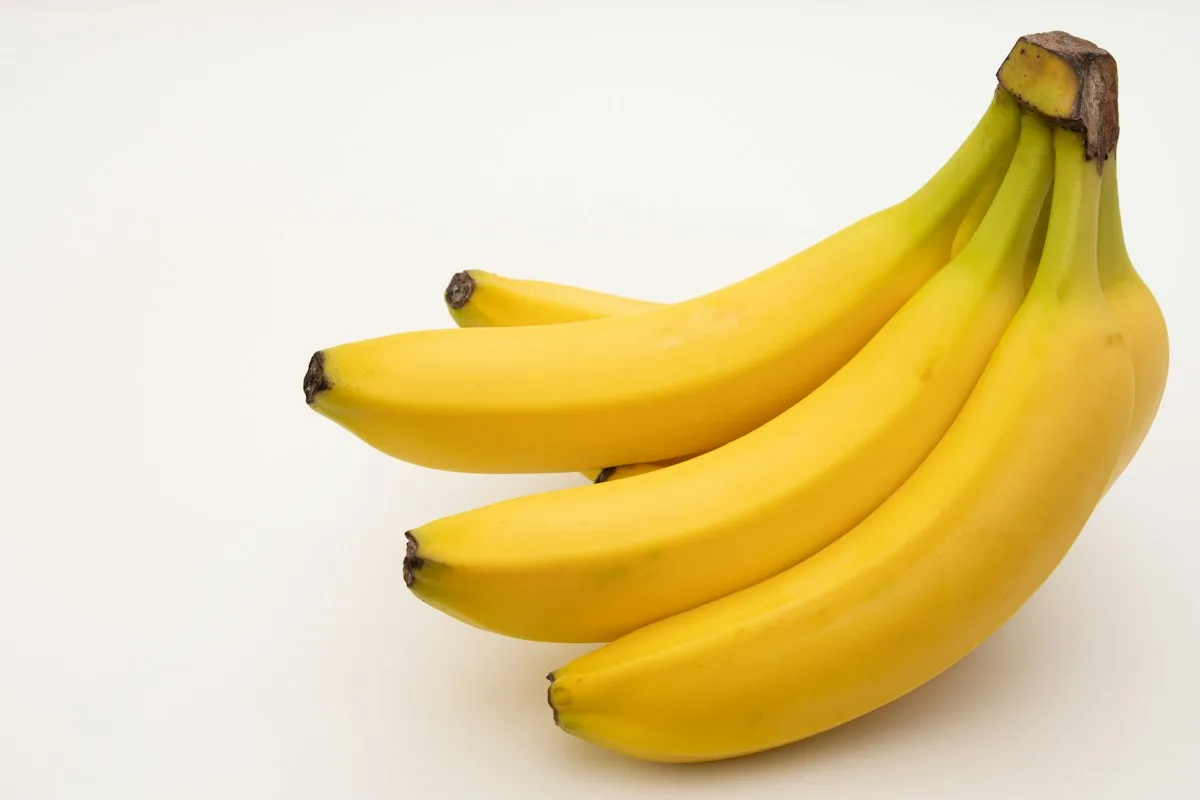
How much sugar is in a banana? A medium banana (about 7 to 8 inches long, 118 grams of fruit) has about 14 grams of sugar, along with 27 grams of total carbohydrate, 3 grams of fiber and 105 calories, according to USDA FoodData Central. All of that sugar is naturally present in the fruit, so it does not count as added sugar on a Nutrition Facts label.
Short answer
Extra small banana: about 10 g sugar. Small: 12 g. Medium: 14 g. Large: 17 g. One cup of sliced banana: 18 g. Riper bananas taste sweeter because more of their starch has turned into sugar.
How Much Sugar Is in a Banana by Size
Bananas vary a lot in size, so how much sugar is in a banana depends mostly on how big it is. USDA gives standard weights for the edible fruit (peel removed):
| Banana size (USDA) | Fruit weight | Sugar | Total carbs | Fiber | Calories |
|---|---|---|---|---|---|
| Extra small (under 6 in) | 81 g | 9.9 g | 18.5 g | 2.1 g | 72 |
| Small (6 to 6 7/8 in) | 101 g | 12.4 g | 23.1 g | 2.6 g | 90 |
| Medium (7 to 7 7/8 in) | 118 g | 14.4 g | 27 g | 3.1 g | 105 |
| Large (8 to 8 7/8 in) | 136 g | 16.6 g | 31.1 g | 3.5 g | 121 |
| 1 cup sliced | 150 g | 18.3 g | 34.3 g | 3.9 g | 134 |
| 1 cup mashed | 225 g | 27.5 g | 51.4 g | 5.8 g | 200 |
Lengths are measured along the outside curve, as USDA does. If you bake with bananas, weigh the peeled fruit: a cup of mashed banana holds roughly two medium bananas and about 27 grams of sugar.
What Kind of Sugar Is in Bananas?
Banana sugar is a mix of three simple sugars. In a medium banana USDA lists about 5.9 grams of glucose, 5.7 grams of fructose and 2.8 grams of sucrose. The same banana still holds about 6 grams of starch, which is why the total carbohydrate (27 g) is much higher than the sugar (14 g).
| Per medium banana (118 g) | Amount |
|---|---|
| Glucose | 5.9 g |
| Fructose | 5.7 g |
| Sucrose | 2.8 g |
| Starch | 6.3 g |
| Fiber | 3.1 g |
Does Ripeness Change the Sugar in a Banana?
Yes, ripeness changes the sugar in a banana a lot. A green banana is mostly starch, much of it resistant starch that the body digests slowly. As the fruit ripens, enzymes break that starch down into sugar, so the peel turns yellow, the flesh softens and the taste gets sweeter. A heavily spotted banana has more sugar and less starch than the yellow banana in the USDA data above, while a firm, green-tipped one has less sugar.
The total calories and carbohydrates stay about the same as a banana ripens; the carbohydrate simply shifts from starch to sugar. If you want a banana that affects blood sugar more gently, pick one that is just yellow rather than deeply speckled, and keep the very ripe ones for baking.
Is the Sugar in Bananas Bad for You?
The sugar in bananas is not added sugar. The FDA counts only sugars added during processing, plus syrups and honey, as added sugars; sugar that is naturally present in whole fruit is not included. The Dietary Guidelines for Americans recommend limiting added sugars to less than 10 percent of daily calories and encourage eating whole fruit, which comes packaged with fiber, water, potassium and vitamins.
A medium banana also gives you about 420 mg of potassium, 0.4 mg of vitamin B6 (roughly a quarter of the Daily Value) and 10 mg of vitamin C. On MyPlate, one large banana counts as 1 cup of fruit, about half of the daily fruit amount in a 2,000-calorie eating pattern.
Bananas and blood sugar
Because a banana is mostly carbohydrate, it does raise blood sugar, more so when it is very ripe. Eating it with protein or fat (yogurt, peanut butter, a handful of nuts) or choosing a smaller banana softens the rise. If you have diabetes or follow a prescribed carbohydrate plan, ask your doctor or a registered dietitian how bananas fit; the numbers here are for planning, not medical advice.
Sugar in Banana vs Other Fruits
So how much sugar is in a banana compared with other fruit? Per 100 grams, bananas sit in the middle of common fruits for sugar. The bigger difference is portion: a banana is an easy 120 to 140 grams in one go.
| Fruit (raw, per 100 g) | Sugar | Fiber | Calories |
|---|---|---|---|
| Strawberries | 4.9 g | 2 g | 32 |
| Orange | 9.4 g | 2.4 g | 47 |
| Blueberries | 10 g | 2.4 g | 57 |
| Apple, with skin | 10.4 g | 2.4 g | 52 |
| Banana | 12.2 g | 2.6 g | 89 |
| Mango | 13.7 g | 1.6 g | 60 |
| Grapes | 15.5 g | 0.9 g | 69 |
Easy Ways to Eat Bananas With Less Sugar at Once
- Choose a small banana, or eat half and save the rest in its peel in the fridge for later the same day.
- Pair it with protein: sliced into plain yogurt, or with a spoon of nut butter.
- Use slightly under-ripe bananas for snacking and very ripe ones for baking, where they replace some of the sugar a recipe would need.
- Freeze ripe banana slices and blend them with milk for a thick drink instead of a sweetened shake.
For breakfast ideas, our overnight oats and baked oatmeal without eggs both use banana for natural sweetness, and the fiber-maxxing guide shows how fruit fits into a higher-fiber day.
Sugar in a Banana FAQ
How much sugar is in a banana per 100 grams?
About 12.2 g of sugar per 100 g of peeled banana, with 22.8 g of carbohydrate and 2.6 g of fiber (USDA FDC 173944).
Do bananas have a lot of sugar?
A medium banana has about 14 g of sugar, a moderate amount for a fruit serving. Grapes and mangoes have more sugar per 100 g; berries have less.
How much sugar is in a small banana?
About 12 g in a small banana (101 g of fruit) and about 10 g in an extra small one (81 g).
How much sugar is in a banana that is very ripe?
More than in a yellow one of the same size, because ripening turns starch into sugar. Total carbohydrate and calories stay about the same.
Do green bananas have less sugar?
Yes. Green bananas are mostly starch, and that starch turns into sugar as they ripen, so a green banana has less sugar than a yellow or spotted one of the same size.
Is the sugar in a banana added sugar?
No. Sugar naturally present in whole fruit is not counted as added sugar by the FDA.
Sources
- USDA FoodData Central
- FDA: Added sugars on the Nutrition Facts label
- Dietary Guidelines for Americans
- MyPlate: Fruits
Featured photo: Unsplash