Mediterranean Chickpea Bowls With Quinoa and Lemon-Tahini Dressing
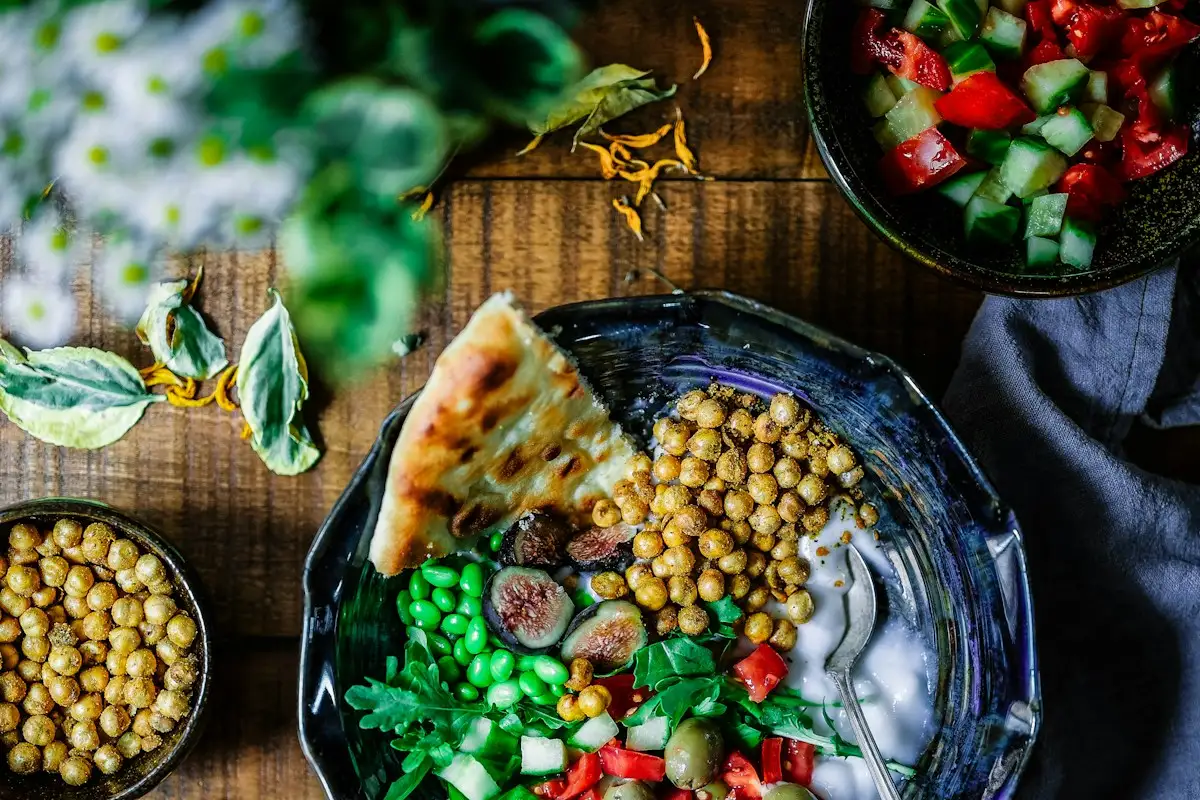
This Mediterranean chickpea lunch bowl pairs crispy roasted chickpeas with quinoa, cherry tomatoes, cucumber, red onion, olives and feta under a quick lemon-tahini dressing. It makes 4 bowls in about 40 minutes, at roughly 490 calories, 18 g protein and 12 g fiber per bowl, and it packs well for weekday lunches.
Quick answer
Roast 2 cans of dried, seasoned chickpeas at 400°F for 20 to 25 minutes. Whisk lemon juice, tahini, garlic, olive oil and water into a dressing. Divide 2 cups cooked quinoa among 4 bowls, add tomatoes, cucumber, onion, olives and feta, then top with the chickpeas and dressing. About 490 calories per bowl.
Mediterranean Chickpea Lunch Bowl
Made it? Rate this recipe
Mediterranean Chickpea Lunch Bowl Ingredients
- 2 cans (15 oz each) chickpeas, drained, rinsed and patted dry
- 3 tbsp olive oil, divided
- 1 tsp ground cumin
- 1/2 tsp smoked paprika
- 1/4 tsp salt, plus a pinch for the dressing
- 2 cups cooked quinoa (from about 2/3 cup dry)
- 1 cup cherry tomatoes, halved
- 1 medium cucumber, diced
- 1/2 small red onion, thinly sliced
- 1/2 cup crumbled feta cheese
- 1/3 cup Kalamata olives, pitted and halved
- 2 tbsp fresh lemon juice
- 1 tbsp tahini
- 1 clove garlic, finely grated
- 2 tbsp chopped fresh parsley
- 1 to 2 tbsp water, to thin the dressing
How to Make a Mediterranean Chickpea Lunch Bowl
- Heat the oven to 400°F. Toss the dry chickpeas with 1 tbsp olive oil, the cumin, smoked paprika and 1/4 tsp salt, and spread them in a single layer on a sheet pan.
- Roast for 20 to 25 minutes, shaking the pan halfway, until golden and crisp outside.
- While they roast, whisk the lemon juice, tahini, garlic, the remaining 2 tbsp olive oil, a pinch of salt and 1 to 2 tbsp water until smooth and pourable.
- Divide the quinoa among 4 bowls and top with the tomatoes, cucumber, red onion, olives and feta.
- Add the warm roasted chickpeas, drizzle with the lemon-tahini dressing and finish with parsley.
Nutrition Facts
Per bowl (1 of 4) (estimated)
- Calories: 490
- Total fat: 23 g
- Saturated fat: 5 g
- Cholesterol: 15 mg
- Sodium: 720 mg
- Carbohydrates: 57 g
- Fiber: 12 g
- Sugar: 9 g
- Protein: 18 g
Estimated from USDA FoodData Central SR Legacy values for canned chickpeas, drained and rinsed (FDC 173801), cooked quinoa (FDC 168917), olive oil, feta (FDC 173420), tahini (FDC 168604), tomatoes, cucumber, red onion, lemon juice, garlic, parsley and spices. USDA has no Kalamata entry, so ripe canned olives (FDC 169094) were used; Kalamata olives are usually saltier. Earlier versions of this page listed 1,190 calories because the whole batch was split into only 2 servings.
Why This Mediterranean Chickpea Bowl Works
Each part brings something different. Roasted chickpeas give crunch and most of the protein and fiber, quinoa adds a filling base, and the raw vegetables keep it fresh. The lemon-tahini dressing is thick enough to cling to everything, while the feta and olives add the salty, briny notes that make the bowl taste Mediterranean. Drying the chickpeas well before roasting is what makes them crisp rather than chewy.
Chickpea Lunch Bowl Nutrition
One bowl, a quarter of the recipe, has about 490 calories, 18 g protein, 57 g carbohydrate and 12 g fiber. The sodium, about 720 mg, comes mostly from the feta, olives and canned chickpeas; rinsing the chickpeas and choosing lower-sodium olives brings it down.
| Per 1 cup | Calories | Protein | Fiber |
|---|---|---|---|
| Canned chickpeas, drained and rinsed (FDC 173801) | 210 | 10.7 g | 9.6 g |
| Cooked quinoa (FDC 168917) | 222 | 8.1 g | 5.2 g |
| Cooked white rice (for comparison) | 205 | 4.3 g | 0.6 g |
Meal Prep for a Mediterranean Chickpea Lunch Bowl
These bowls hold up well for 3 to 4 days. Cool the roasted chickpeas and quinoa, then refrigerate everything within 2 hours of cooking. Pack the dressing and chickpeas in separate small containers and add them just before eating so the chickpeas stay crunchy and the vegetables stay crisp. FoodSafety.gov lists prepared salads and cooked leftovers at 3 to 4 days in the refrigerator. Our guide to meal prep at home covers containers and planning.
Swaps for a Mediterranean Chickpea Bowl
- Grain: use couscous, farro, bulgur or brown rice instead of quinoa.
- Vegan: leave out the feta and add extra olives or avocado.
- More protein: add sliced grilled chicken breast cooked to 165°F.
- Dressing: swap the lemon-tahini for a spoonful of hummus thinned with lemon juice.
- Vegetables: add roasted red peppers, shredded carrots or baby spinach.
How to Get Crispy Roasted Chickpeas
- Rinse, drain and pat the chickpeas very dry with a towel; loose skins can be rubbed off.
- Spread them in one layer with space between them so they roast instead of steam.
- Roast at 400°F and shake the pan halfway through.
- Leave leftover chickpeas uncovered in the fridge for the first hour so condensation does not soften them.
Frequently Asked Questions
Can I make a Mediterranean chickpea lunch bowl ahead of time?
Yes. Roast the chickpeas, cook the quinoa and mix the dressing up to 3 days ahead, store them separately in the fridge, and assemble the bowls when you eat.
How many calories are in this chickpea lunch bowl?
About 490 calories per bowl when the recipe is divided into 4.
How do I keep the chickpeas crispy?
Dry them completely, roast them in a single layer and store them apart from the dressing.
Is this Mediterranean chickpea bowl vegan?
It is vegetarian. Leave out the feta to make it vegan.
Can I eat the bowl cold?
Yes. It works cold or at room temperature, which makes it good for packed lunches; keep it in the fridge until you eat it.
Sources
Featured photo: Unsplash