Chips and Queso: Calories & Nutrition Facts

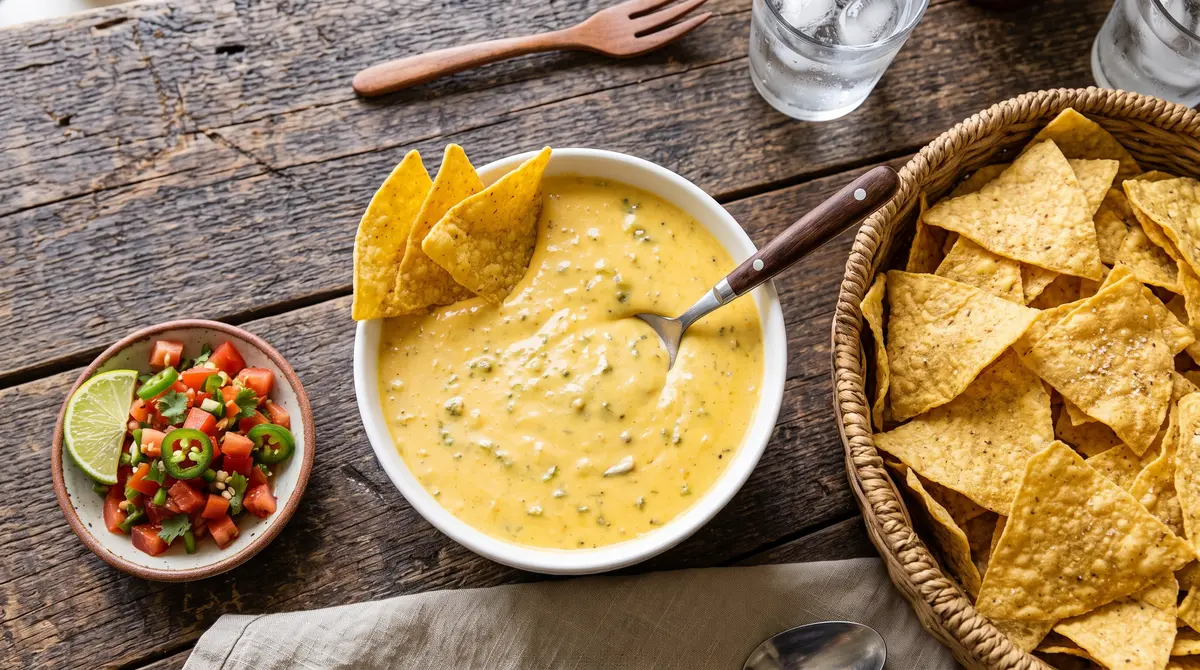
Chips and queso calories are one of those numbers people avoid checking on purpose, and it’s easy to see why: a standard restaurant serving of tortilla chips with melted cheese dip can run 500-800 calories before you’ve finished the basket, mostly because chips and cheese are both calorie-dense on their own before you ever combine them. Knowing where those calories actually come from makes it a lot easier to enjoy the snack without guessing at the damage.
The Numbers, Roughly
A typical restaurant portion of tortilla chips (about 1 ounce, roughly 8-10 chips) runs around 140-150 calories on its own. A standard 2-ounce serving of queso dip adds another 180-220 calories, mostly from the cheese and any added cream or milk in the recipe. Put together, a modest chips-and-queso serving lands around 320-370 calories — but restaurant portions are rarely modest, and a shared bowl with refills easily pushes the real total toward 600-800 calories once you account for how much of the dip actually gets scooped up per chip. Chips and queso calories add up fastest in exactly that gap between the modest portion and the real one.
What Drives the Calorie Count
Chips and queso calories break down into two separate sources. Queso’s calories come almost entirely from fat: cheese is roughly 70-100 calories per ounce depending on the type, and a queso recipe built on processed cheese product with added cream pushes that even higher per serving than a queso made from real shredded cheese and milk. Chips add calories mainly from the corn and the frying oil — baked tortilla chips typically run 20-30% fewer calories than fried ones for the same serving size, which is the single easiest swap if you’re watching the total.
How to Lighten Chips and Queso Without Losing the Appeal
Swapping fried chips for baked ones cuts a meaningful chunk of calories without changing the flavor much, since the seasoning and corn flavor carry the chip either way. Making queso at home with reduced-fat cheese, a splash of milk instead of heavy cream, and a diced tomato or two stretches the dip further while cutting calories per serving. Portioning the queso into a small bowl per person instead of one shared vat also helps naturally — it’s easy to underestimate how many chips you’ve dipped when the bowl never empties.
Nutritional Trade-Offs Worth Knowing
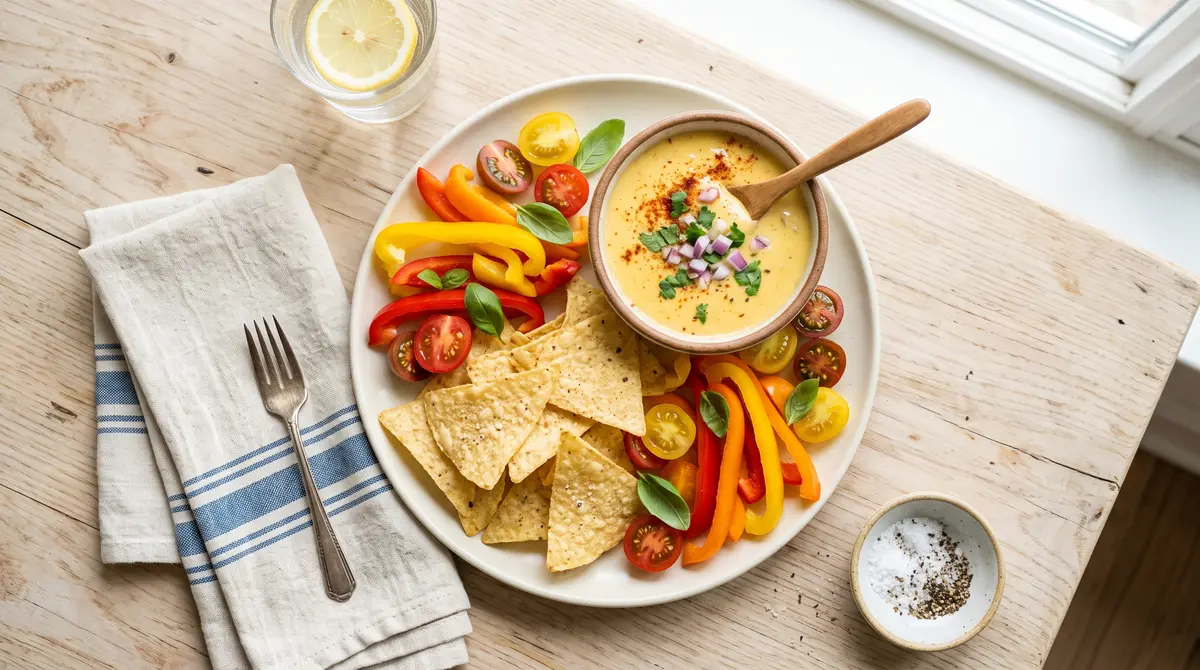
Queso does bring some real nutrition along with the calories — cheese is a solid source of protein and calcium, which plain chips alone don’t offer. The bigger concern for most people is sodium: a restaurant serving of chips and queso can carry 700-1,200 milligrams of sodium between the salted chips and the cheese, which is a significant share of a day’s recommended intake in one snack. Pairing the dip with fresh vegetables like bell pepper strips alongside the chips is a simple way to add volume and nutrients without pushing chips and queso calories any higher.
How It Compares to Other Chip-and-Dip Snacks
Against guacamole, chips and queso generally comes out higher in calories and saturated fat but lower in fiber and heart-healthy fat, since guacamole’s calories come mostly from avocado rather than cheese and cream. Salsa is the lightest common option by a wide margin — a 2-ounce serving runs only 15-20 calories, since it’s mostly tomato, onion, and pepper with little to no added fat. Ranch dip lands somewhere between queso and guacamole in calories, but often carries more sodium than either. None of this means queso is off-limits — it just means chips and queso calories matter more to watch than they would with a vegetable-based dip.
A Realistic Way to Fit It Into a Day of Eating
Treating chips and queso as a shared appetizer rather than a full snack for one person keeps the numbers reasonable — splitting a standard restaurant order three or four ways lands each person closer to 150-200 calories, which is comparable to most other bar-food starters. If it’s the main snack rather than a shared plate, pairing a smaller portion with something lower in calories, like a side salad or extra vegetables for dipping alongside the chips, helps balance the plate without cutting the queso out entirely. Ordering queso on the side rather than pre-mixed into a dish also gives more control over the portion, since it’s easy to spoon out a reasonable amount instead of eating straight from a bottomless bowl.
Frequently Asked Questions
How many chips and queso calories are in a typical restaurant serving? A typical shared restaurant serving runs 500-800 calories total, depending on the chip type, how the queso is made, and how much gets eaten from a refillable basket.
Is queso healthier than other dips? It’s roughly comparable to other cheese-based dips — higher in protein and calcium than something like guacamole, but generally higher in saturated fat and sodium too.
Are baked chips actually lower in calories than fried? Yes, typically by about 20-30% for the same serving size, since baked chips are made with little to no added oil compared to frying.
Does the type of tortilla chip change the calorie count much? Yes, somewhat — thicker, restaurant-style chips generally carry a few more calories per chip than thin, lightly salted ones, simply because they’re denser and often fried a bit longer.
Is white queso lower in calories than yellow queso? Not meaningfully — the color comes from the type of cheese and peppers used, not a difference in fat content, so calories between the two styles are typically comparable.
Does adding meat to queso change the calorie count a lot? Yes, noticeably — stirring in seasoned ground beef or beef chorizo can add another 100-150 calories per serving, so a meat-topped queso should be treated as closer to a light meal than a snack.
Is homemade queso lower in calories than restaurant queso? It can be, mainly because you control the cheese-to-milk ratio and can skip the extra butter or cream some restaurants add for a glossier texture — using real shredded cheese and milk instead of a processed cheese product also usually cuts calories.