Yellow Bell Pepper Nutrition Facts (Calories, Vitamin C)
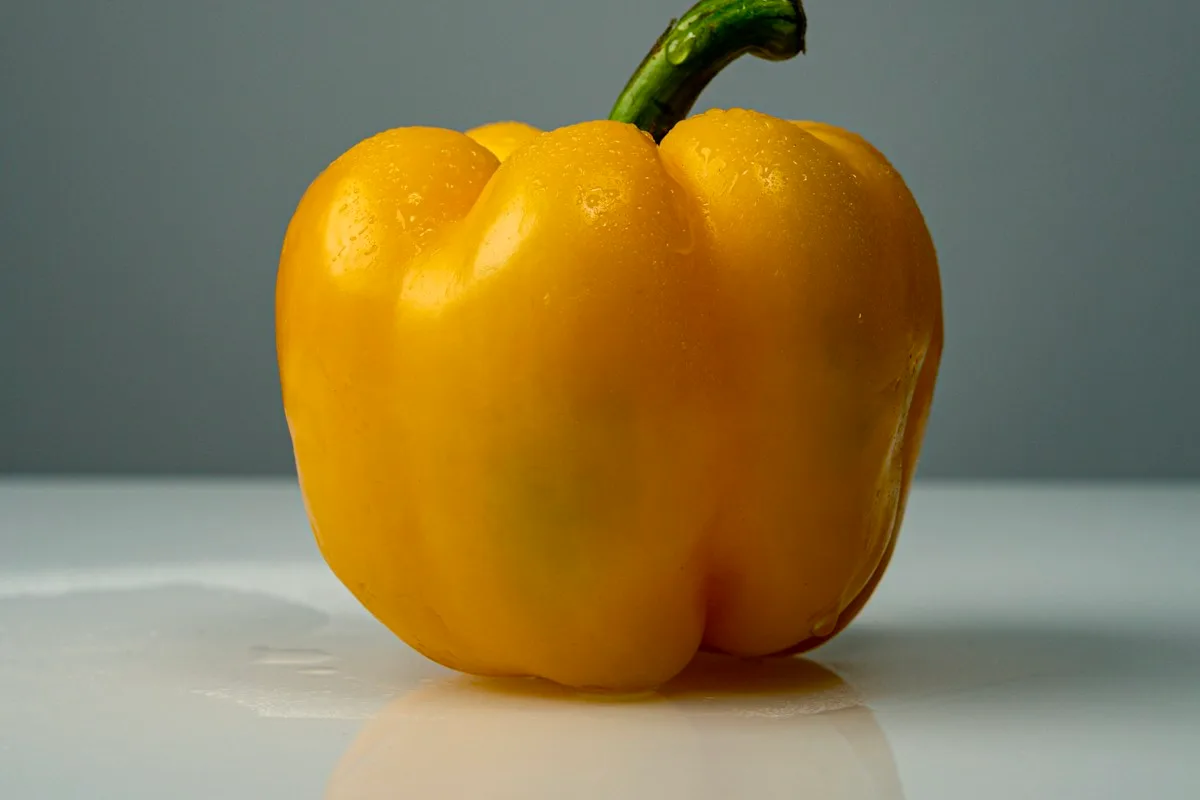
A cup of chopped raw yellow bell pepper has about 40 calories, 9.4 g of carbs and 1.3 g of fiber, and it carries roughly 274 mg of vitamin C, more than red or green peppers and about three times the daily target for most adults. The numbers below come straight from USDA FoodData Central, portion by portion.
Quick answer
One large yellow bell pepper (186 g) has about 50 calories, 12 g of carbs (10 g net), 1.9 g of protein and 342 mg of vitamin C. Per 100 g it is 27 calories and 184 mg of vitamin C.
Yellow Bell Pepper Nutrition Facts by Portion
All values are for raw yellow bell pepper from the USDA FoodData Central entry for sweet yellow peppers. The cup weight (149 g) is USDA’s standard weight for a cup of chopped sweet pepper.
| Portion | Calories | Carbs | Fiber | Protein | Vitamin C | Potassium |
|---|---|---|---|---|---|---|
| 100 g | 27 | 6.3 g | 0.9 g | 1.0 g | 184 mg | 212 mg |
| 10 strips (52 g) | 14 | 3.3 g | 0.5 g | 0.5 g | 96 mg | 110 mg |
| 1 cup chopped (149 g) | 40 | 9.4 g | 1.3 g | 1.5 g | 274 mg | 316 mg |
| 1 large pepper (186 g) | 50 | 11.8 g | 1.7 g | 1.9 g | 342 mg | 394 mg |
Fat is close to zero (0.2 g per 100 g), sodium is 2 mg per 100 g and there is no cholesterol. A large pepper is about 92% water, which is why it is so low in calories for its size.
How Many Calories and Carbs Are in One Yellow Bell Pepper?
One large yellow bell pepper has about 50 calories and 11.8 g of carbohydrate, of which 1.7 g is fiber, so roughly 10 g net carbs. A medium pepper is smaller (around 120 g), which works out to about 32 calories and 7.6 g of carbs. Half a large pepper sliced into strips for a snack is about 25 calories.
That makes yellow peppers easy to fit into low-carb and keto meal plans: a full cup of chopped pepper stays under 10 g of total carbs. Light cooking does not change the calorie count in any meaningful way; adding oil does, at about 120 calories per tablespoon.
Yellow vs. Red vs. Green Bell Pepper
All three colors are the same plant picked at different stages of ripeness. Green peppers are harvested earliest; left on the plant, they turn yellow or orange and finally red. The nutrition changes along the way:
| Per 1 cup chopped (149 g), raw | Yellow | Red | Green |
|---|---|---|---|
| Calories | 40 | 39 | 30 |
| Carbs | 9.4 g | 9.0 g | 6.9 g |
| Fiber | 1.3 g | 3.1 g | 2.5 g |
| Vitamin C | 274 mg | 191 mg | 120 mg |
| Vitamin A (RAE) | 15 mcg | 234 mcg | 27 mcg |
| Potassium | 316 mg | 314 mg | 261 mg |
| Taste | Sweet, mild | Sweetest | Grassy, slightly bitter |
Yellow is the clear winner for vitamin C. Red is the best source of vitamin A (from beta-carotene) and has more fiber, and green is the lowest in calories and sugar. If you want the most vitamin C per bite, pick yellow; for vitamin A, pick red.
Vitamin C in a Yellow Bell Pepper
The NIH Office of Dietary Supplements sets the daily vitamin C target at 90 mg for adult men and 75 mg for adult women. Half a cup of chopped yellow pepper (about 137 mg) covers either one. For comparison, the same fact sheet lists a medium orange at about 70 mg, so a cup of yellow pepper has close to four times as much.
Vitamin C also helps your body absorb the iron in plant foods, so yellow pepper is a useful partner for beans, lentils, chickpeas and spinach in the same meal.
Does Cooking Destroy the Vitamin C?
Some of it. Vitamin C dissolves in water and breaks down with heat, so long boiling loses the most. The NIH notes that steaming or microwaving can reduce those losses. Quick stir-frying, roasting in large pieces, or eating some of the pepper raw (in salads or as dippers) keeps more of it.
Other Nutrients Worth Knowing
- Potassium: about 394 mg in a large pepper, useful for a food with only 50 calories.
- Vitamin B6: 0.31 mg in a large pepper, about 18% of the daily value.
- Folate: 48 mcg in a large pepper.
- Fiber: modest at 1.7 g per large pepper; most of it is in the skin and white ribs, so don’t peel unless a recipe needs it.
How to Choose and Store Yellow Bell Peppers
Choose peppers that feel firm and heavy for their size, with glossy, tight skin and a fresh green stem. Avoid soft spots and wrinkles. An evenly bright yellow color means the pepper ripened fully on the plant.
According to the University of Arizona Cooperative Extension, whole, unwashed bell peppers keep in the refrigerator for about a week, and cut peppers in a sealed container should be used within five days. To freeze, slice and blanch the peppers, freeze them flat on a baking sheet, then move them to a sealed bag; they keep for up to a year and are best used in cooked dishes.
Easy Ways to Use Yellow Bell Peppers
- Raw strips with hummus or a yogurt dip, or alongside chips and queso to lighten the plate.
- Diced into shakshuka, where the sweetness balances the tomatoes.
- Sliced into a quick stir-fry for the last 2 to 3 minutes of cooking to keep the crunch and more of the vitamin C.
- Roasted halves stuffed with rice, beans and cheese for an easy dinner.
Yellow Bell Pepper FAQ
How many calories are in a yellow bell pepper?
About 50 calories in a large pepper (186 g), 40 in a cup chopped and 27 per 100 g.
How many carbs are in a yellow bell pepper?
A large pepper has 11.8 g of carbs with 1.7 g of fiber, so about 10 g net carbs. A cup of chopped pepper has 9.4 g.
Is yellow bell pepper healthier than red or green?
Each has a strength. Yellow has the most vitamin C, red has the most vitamin A and fiber, and green is lowest in calories. All three are nutritious, low-calorie vegetables.
Is yellow capsicum the same as yellow bell pepper?
Yes. “Capsicum” is the name used in the UK, Australia and India; the vegetable and its nutrition are the same.
Can you eat yellow bell pepper on a keto diet?
Yes, in normal portions. A cup of chopped pepper has under 10 g of total carbs, and a few strips add only 3 to 4 g.
Is it okay to eat yellow bell pepper every day?
For most people, yes. It is a low-calorie vegetable with plenty of vitamin C and water. If peppers bother your stomach, try them cooked rather than raw, or in smaller amounts.
Sources
- USDA FoodData Central: Peppers, sweet, yellow, raw
- USDA FoodData Central: Peppers, sweet, red, raw and green, raw
- NIH Office of Dietary Supplements: Vitamin C fact sheet
- University of Arizona Cooperative Extension: Bell Peppers (az1924)
Featured photo: Unsplash