Raw vs Cooked Meat Calories and Protein (USDA Chart)
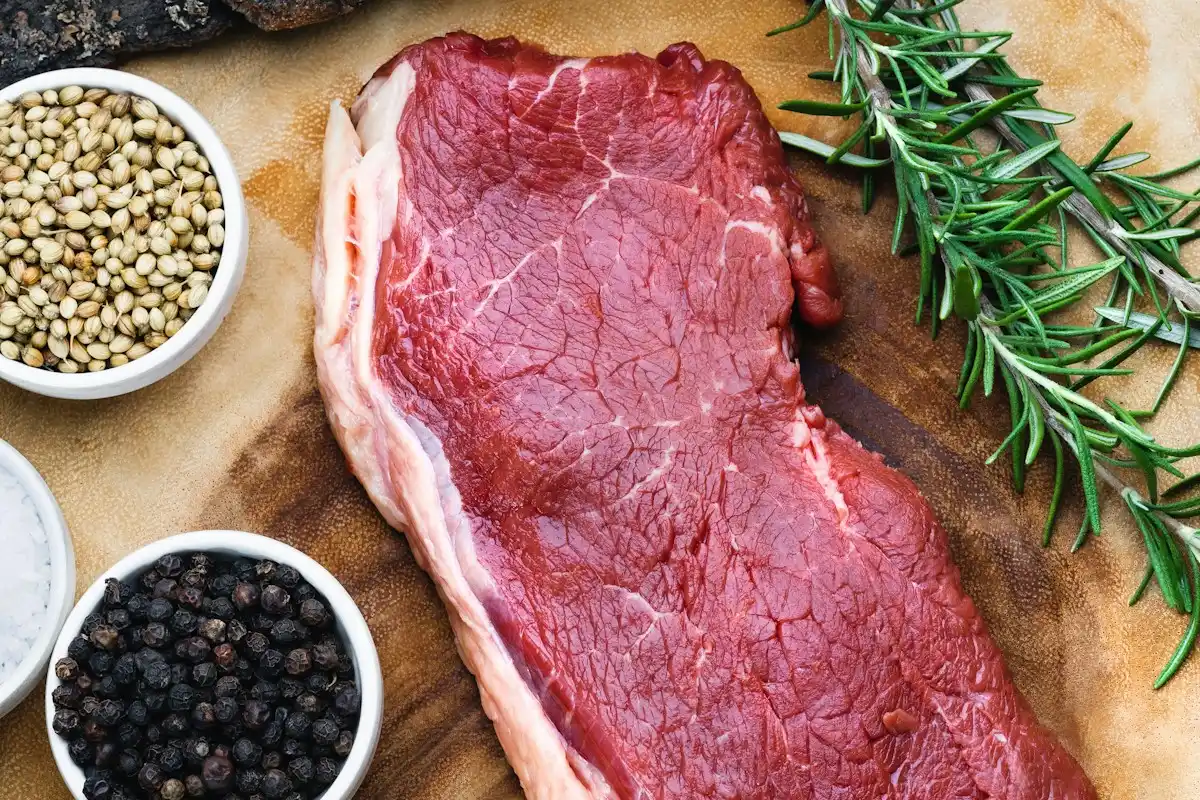
Raw vs cooked meat in one line: cooked meat has more calories and protein per 100 g than raw meat, but cooking doesn’t add any. Meat loses water as it cooks, so the same protein is packed into less weight. A 100 g raw chicken breast has 22.5 g of protein; after grilling it weighs about 75 g and still has about 22.5 g, which works out to 30.5 g per 100 g of cooked chicken. The chart below shows raw and cooked values side by side from USDA FoodData Central.
Quick answer
Raw meat does not have more protein than cooked meat; the protein stays the same while water is lost. Per 100 g, cooked meat usually shows about 25 to 50% more protein than raw (less for salmon). Nutrition labels on fresh meat describe the raw product, so weigh meat raw if you track with label values.
Raw vs Cooked Meat Calories and Protein per 100 g
| Food | Raw kcal | Raw protein | Raw fat | Cooked | Cooked kcal | Cooked protein | Cooked fat |
|---|---|---|---|---|---|---|---|
| Chicken breast, skinless | 120 | 22.5 g | 2.6 g | grilled | 151 | 30.5 g | 3.2 g |
| Chicken thigh, skinless | 121 | 19.7 g | 4.1 g | roasted | 179 | 24.8 g | 8.2 g |
| Ground beef 80/20 | 254 | 17.2 g | 20 g | broiled patty | 270 | 25.8 g | 17.8 g |
| Ground beef 90/10 | 176 | 20 g | 10 g | broiled patty | 217 | 26.1 g | 11.8 g |
| Beef eye of round, lean | 121 | 23.4 g | 3 g | roasted | 163 | 29.8 g | 3.9 g |
| Ground turkey 93/7 | 150 | 18.7 g | 8.3 g | pan-browned | 213 | 27.1 g | 11.6 g |
| Ground lamb | 282 | 16.6 g | 23.4 g | broiled | 283 | 24.8 g | 19.6 g |
| Atlantic salmon, farmed | 208 | 20.4 g | 13.4 g | baked or grilled | 206 | 22.1 g | 12.4 g |
| Tilapia | 96 | 20.1 g | 1.7 g | baked or grilled | 128 | 26.2 g | 2.7 g |
| Atlantic cod | 82 | 17.8 g | 0.7 g | baked or grilled | 105 | 22.8 g | 0.9 g |
Why Cooked Meat Shows More Calories per 100 g
Muscle is about 70 to 75% water. Heat shrinks the protein fibers and squeezes some of that water out, so a piece of meat typically loses 20 to 30% of its weight as it cooks. The protein, and most of the fat, stays behind in a smaller piece, so every 100 g of cooked meat contains more of both.
Fatty meats are the exception for calories. Ground beef 80/20 and ground lamb render a lot of fat into the pan, so their calories per 100 g barely rise even though protein jumps by about half. Salmon loses less water than lean fish, so its numbers change the least.
What 100 g of Raw Meat Becomes After Cooking
| 100 g raw | Approx. cooked weight | Protein (unchanged) | Calories in that cooked portion |
|---|---|---|---|
| Chicken breast | about 75 g | 22.5 g | about 110 |
| Chicken thigh | about 80 g | 19.7 g | about 140 |
| Ground beef 80/20 | about 65 to 70 g | 17.2 g | about 180 |
| Ground beef 90/10 | about 75 g | 20 g | about 165 |
| Beef eye of round | about 80 g | 23.4 g | about 130 |
| Ground turkey 93/7 | about 70 g | 18.7 g | about 145 |
| Tilapia | about 75 g | 20.1 g | about 100 |
For lean meats the calories in the cooked portion are close to the raw calories, because almost nothing but water is lost. For fatty ground meats, the cooked portion has fewer calories than the raw meat you started with, because fat drips away. That is also why 200 g of raw ground beef usually ends up as about 130 to 150 g cooked.
Are Nutrition Labels on Meat Raw or Cooked?
Labels on fresh, uncooked meat and poultry describe the product as packaged, which means raw. Packages of cooked products such as deli meat or rotisserie chicken describe the cooked food. If you log a label’s values, weigh the meat in the same state: raw for a raw label. Logging cooked weight against raw values undercounts protein and calories by about 25 to 50%.
How to Convert Raw Weight to Cooked Weight
- Weigh the raw meat and calculate its nutrition from raw values.
- Cook it, then weigh the whole cooked batch.
- Divide the raw totals by the cooked weight to get values per gram of cooked meat.
- Weigh each portion you serve and multiply.
Example: 500 g of raw chicken breast has 112 g of protein. If it weighs 375 g after grilling, each 100 g cooked portion has about 30 g of protein.
Cook ground meats to 160°F, poultry to 165°F, and whole cuts of beef and lamb to 145°F with a 3-minute rest, per the FoodSafety.gov temperature chart.
Raw vs Cooked Meat FAQ
Does raw meat have more protein than cooked meat?
No. A piece of meat has about the same protein before and after cooking. Per 100 g, cooked meat shows more protein because water has been lost.
Is ground beef nutrition on the package raw or cooked?
Raw. 100 g of raw 80/20 ground beef has 254 calories and 17.2 g of protein; once broiled, 100 g has 270 calories and 25.8 g of protein.
How much protein is in 100 g of cooked beef?
About 26 to 30 g, depending on the cut: 25.8 g for broiled 80/20 ground beef and 29.8 g for roasted eye of round.
Should I weigh meat raw or cooked?
Raw is more consistent, because cooked weight changes with cooking time. Either works as long as you use matching raw or cooked nutrition values.
For detailed numbers on single foods, see chicken breast calories, roast beef nutrition and hamburger calories.
Sources
Featured photo: Unsplash