Roast Beef Nutrition Facts: Homemade vs. Deli-Style
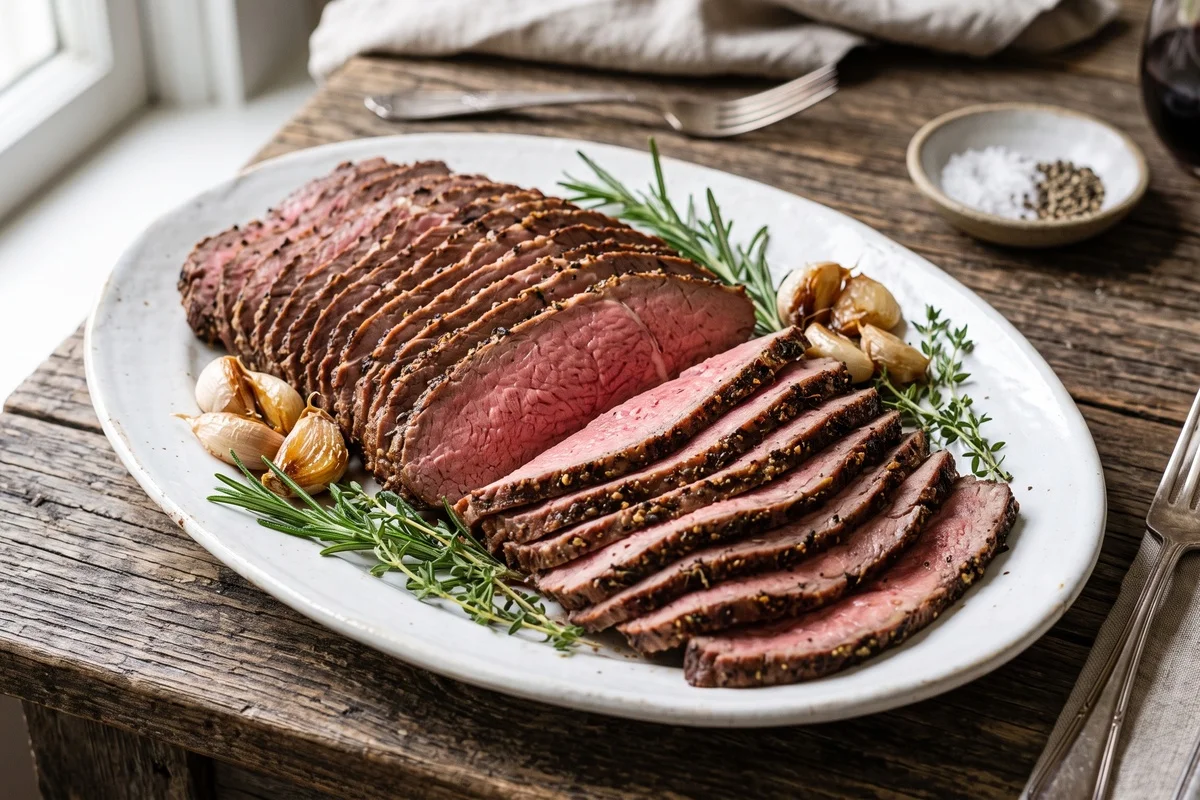
Roast beef nutrition facts change a lot depending on whether “roast beef” means a lean cut you roasted at home or the pre-sliced deli version from the lunch meat counter, and the two aren’t as similar as the shared name suggests. A home-roasted eye of round comes out leaner in sodium but higher in calories per ounce than most people expect, while deli-style roast beef often runs lower in calories by weight but carries far more sodium from curing and processing.
Homemade Roast Beef: The Numbers
Per USDA FoodData Central, a lean eye of round roast, trimmed of visible fat and roasted, has about 167 calories per 100 grams, with 29.6 grams of protein, 4.5 grams of fat, and 1.6 grams of saturated fat. Scaled to more common serving sizes:
- 3 oz (85g), cooked: about 142 calories, 25.2 grams protein, 3.8 grams fat.
- 4 oz (113g), cooked: about 189 calories, 33.5 grams protein, 5.1 grams fat.
- 100g, cooked: 167 calories, 29.6 grams protein, 4.5 grams fat, 1.6 grams saturated fat.
Eye of round is one of the leaner roasting cuts, which is why it shows up so often in these kinds of nutrition comparisons — a fattier cut like a rib roast or a well-marbled chuck roast will carry noticeably more calories and saturated fat per ounce than the figures above, even though both get called “roast beef” once they’re on a sandwich.
Deli-Style Roast Beef: The Numbers
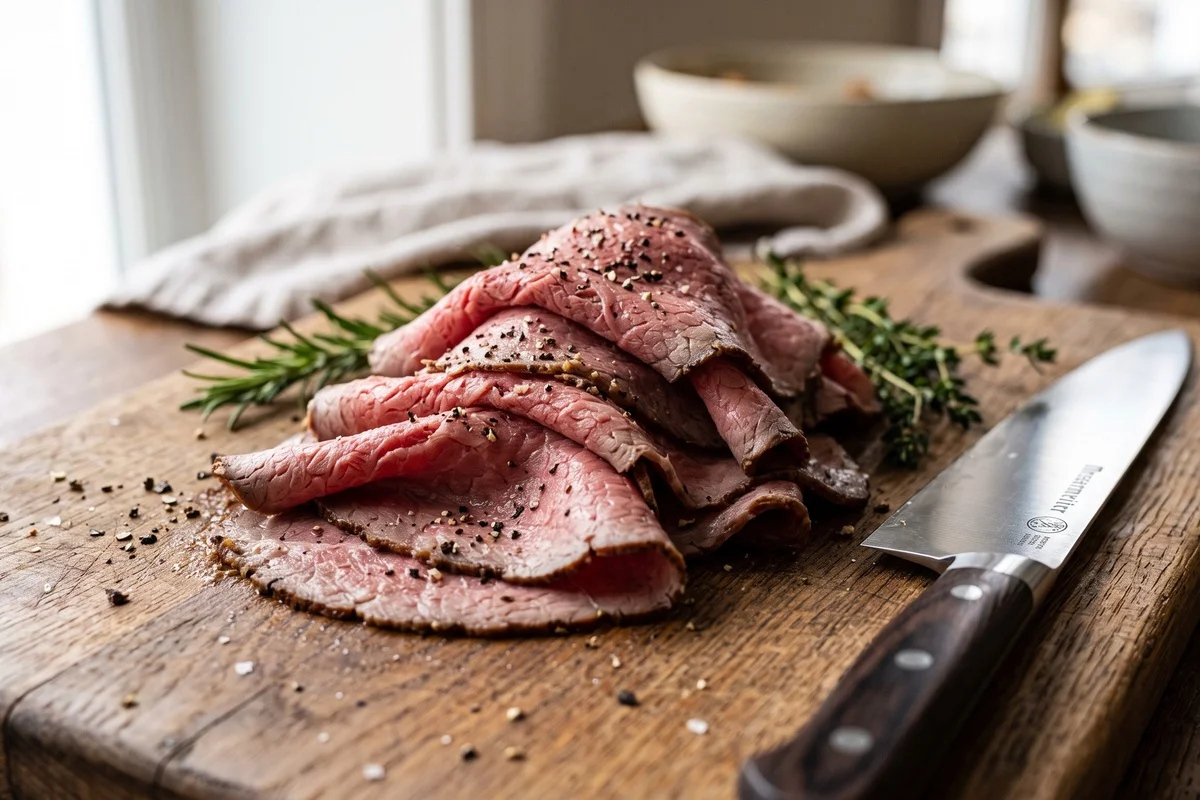
Pre-packaged, sliced deli roast beef looks lighter on paper: USDA-sourced data puts it at about 122 calories per 100 grams, with 19 grams of protein, 3.8 grams of fat, and roughly 880 milligrams of sodium. By serving size, that’s about 68 calories and 492 milligrams of sodium for a 2 oz portion (a typical single-sandwich amount), or around 104 calories and 748 milligrams of sodium for 3 oz. The calorie count is genuinely lower than home-roasted beef by weight, largely because deli meat is processed with added moisture and curing solution that dilutes the meat itself — but that same processing is exactly where the sodium comes from.
Roast Beef Nutrition Facts: Homemade vs. Deli
Neither version is straightforwardly “better” — it depends on which number matters more to you. Homemade roast beef has meaningfully more protein per ounce and far less sodium, but it also carries more calories per ounce than the deli version. Deli roast beef is convenient and lower in calories by weight, but the sodium adds up fast: two sandwiches’ worth of deli roast beef alone can use up nearly two-thirds of the daily sodium limit before counting the bread, cheese, or condiments on top. MedlinePlus puts the general recommendation for most adults at under about 2,300 milligrams of sodium a day, which makes deli meat worth watching if you’re eating it regularly rather than occasionally.
Roast Beef as a Protein Source
Roast beef nutrition facts also shift once protein-per-calorie enters the picture — homemade lean roast beef is one of the more efficient options on a plate — roughly 30 grams of protein for under 170 calories per 100 grams is a strong ratio next to most other cuts of beef, since leaner roasting cuts carry less fat weighing down the calorie count. That efficiency drops once you switch to deli-style roast beef, where the same 100 grams delivers about 10 grams less protein alongside the added sodium, which is worth factoring in if protein per calorie is the goal rather than just convenience.
Common Mistakes to Avoid
- Assuming “roast beef” always means the same cut and the same calorie count, when a lean eye of round and a fattier chuck or rib roast can differ significantly.
- Overlooking sodium in deli roast beef because the calorie count looks reasonable — the two numbers move in opposite directions between homemade and deli versions.
- Not weighing the actual cooked portion, since a roast can shrink 20-25% from raw to cooked weight, which changes the calorie count per piece even though the nutrition per 100 grams stays the same.
- Trimming visible fat before weighing for a recipe but not before logging the nutrition, which mismatches the numbers you’re tracking against what you actually ate.
Frequently Asked Questions
Is roast beef healthy? A lean cut like eye of round, trimmed of visible fat and roasted without added fat, is a solid source of protein and iron with a moderate calorie count. Deli-style roast beef is leaner in calories but much higher in sodium, so it’s worth moderating if you eat it often.
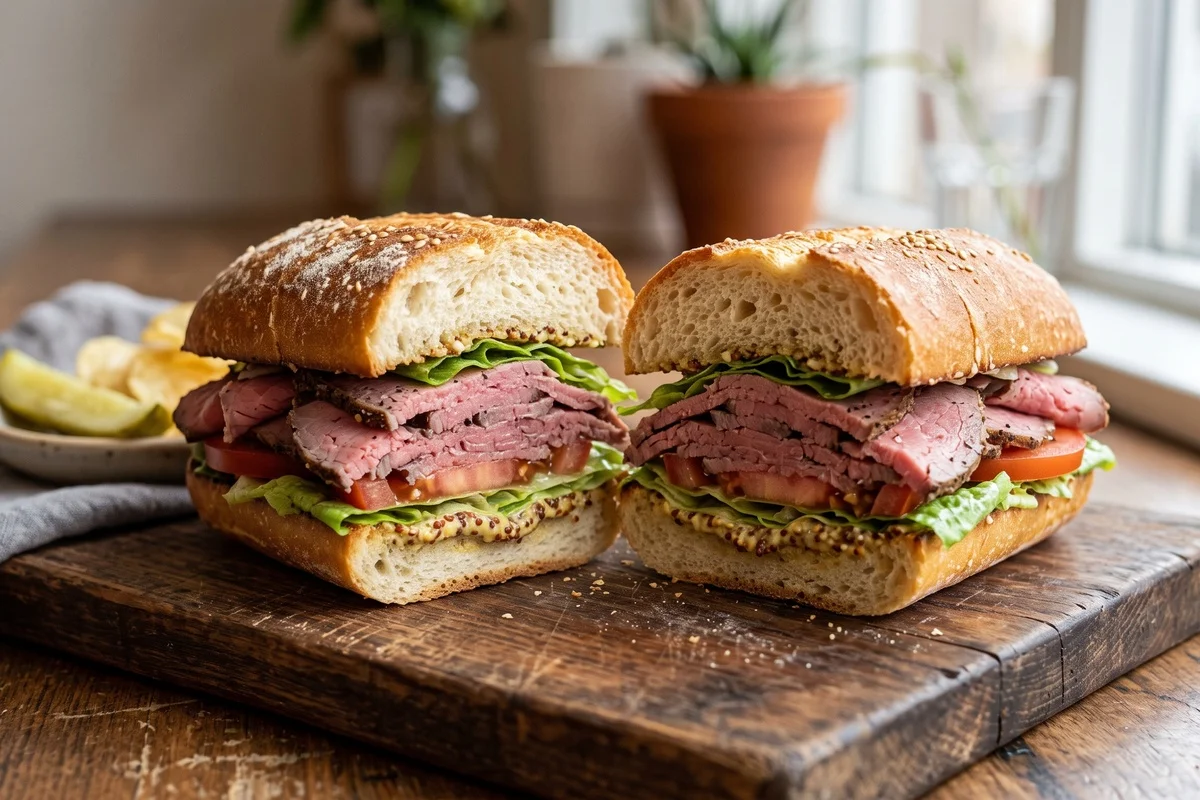
How many calories are in a roast beef sandwich? That depends entirely on the bread, condiments, and cheese, but the roast beef itself — about 3 oz of deli-style meat — contributes roughly 100-105 calories and around 750 milligrams of sodium before anything else is added.
Which cut of beef is used for roast beef? Eye of round, top round, and bottom round are common lean choices for home roasting, while rib roast and chuck roast are fattier options that cook up richer but with more calories and saturated fat per serving.
Why does deli roast beef have fewer calories than homemade? Deli meat is processed with added moisture, brine, and curing ingredients, which dilutes the meat by weight — you’re getting less actual beef and more added liquid and salt per ounce compared to a roast you cooked yourself.
How much protein is in roast beef? Homemade lean roast beef has close to 30 grams of protein per 100 grams cooked, while deli-style roast beef runs closer to 19 grams per 100 grams, since it’s a less concentrated product overall.
Is roast beef high in sodium? Homemade roast beef seasoned simply with salt and pepper is relatively low in sodium. Deli-style roast beef is a different story — at around 880 milligrams per 100 grams, it’s one of the higher-sodium deli meats, largely due to the curing process.